Buffalo · Blue Lines · a terraced house in West London
The Man in the Back Room
Cameron McVey — photographer, Buffalo fixer, and the producer behind Blue Lines — on hearing the world for his blind mother, handing his cameras to Jamie Morgan, and why he still signs his records Booger Bear.
Interview · Barnzley | Guest · Cameron McVey
Cameron McVey has spent forty years being the person other people’s records could not have happened without, and almost none of that time being the person on the sleeve. He learned to hear before he learned to work: his mother was blinded at five, and the house was full of music because music was the part of the world she could still enter unassisted. Everything he saw, he described out loud.
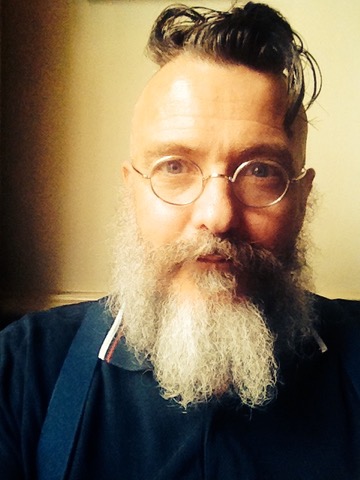
He came into the business sideways, as fashion photographers sometimes do — bored of stills, into commercials, into MTV with Jamie Morgan. Through Roger Charity he met Ray Petri, who came to assist him and turned out to be the better stylist, the better maker of concepts, the guru of the whole Buffalo circle. McVey became the one who made sure Ray got paid.
By the time Buffalo was a movement he had handed his cameras to Morgan and Marc Le Bon and moved to the back room permanently. A jeans commercial with no music budget put him in a studio for the first time; the demo got him a record deal; the record was a boy-band single now filed under cult classic. The B-side had a girl he had met on a plane to Tokyo on it. She was better than the A-side. Her name was Neneh Cherry, and he has been married to her for twenty-five years.
What followed reads like a list of other people’s triumphs: Buffalo Stance. Blue Lines, seventy-five per cent of it made in a terraced house in West London. All Saints. Sugababes — both timed, deliberately, to whichever of his children was the right age to tell him the truth. He is still there now, cutting up EPs for Massive Attack in a converted garage, producing Chrissie Hynde, holding hands.