London, 1971 · a Dutchman's paintings fill the frame for two seconds · nobody learns his name
Christ Unltd
The artist who furnished the crime scene. On Cornelius Makkink, whose paintings Kubrick put on the wall behind the murder and never bothered to put in the credits properly.
Words in the spirit of Nick Kent meets Brian Sewell — tongue very much in cheek
You will not have heard of Cornelius Makkink. This is, in a narrow and specific sense, entirely his own fault, and in a broader sense entirely ours — because the man painted the single most-seen piece of pornography in twentieth-century cinema and somehow still gets a line and a half in the credits, wedged between the prop master and a hairdresser billed for “daillies.”
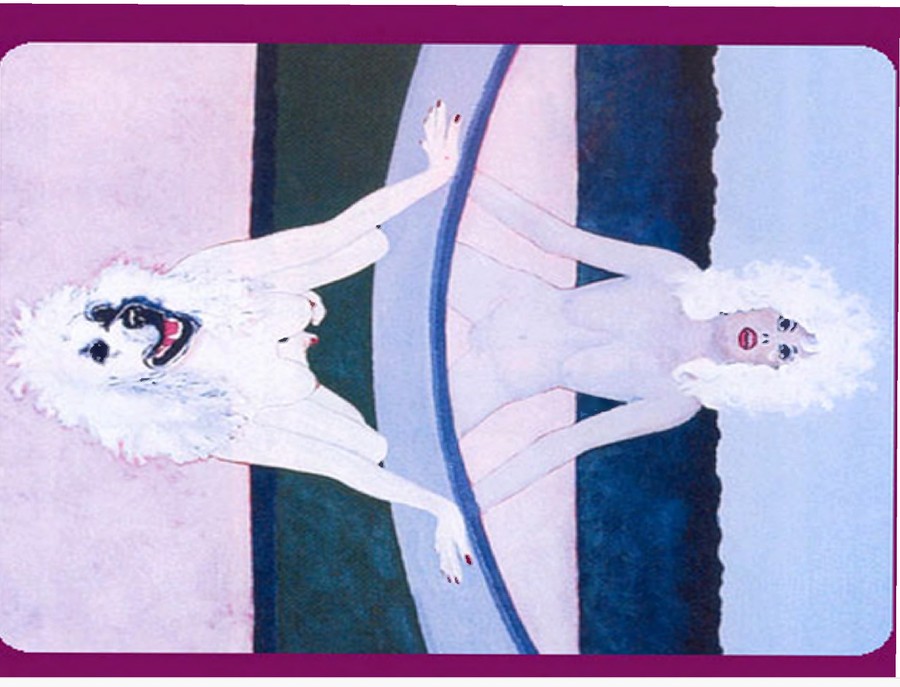
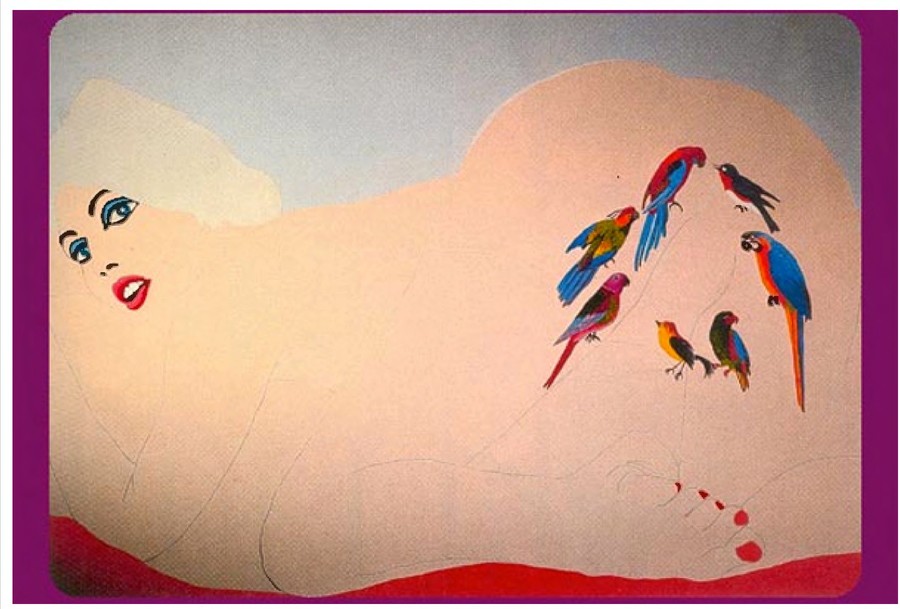
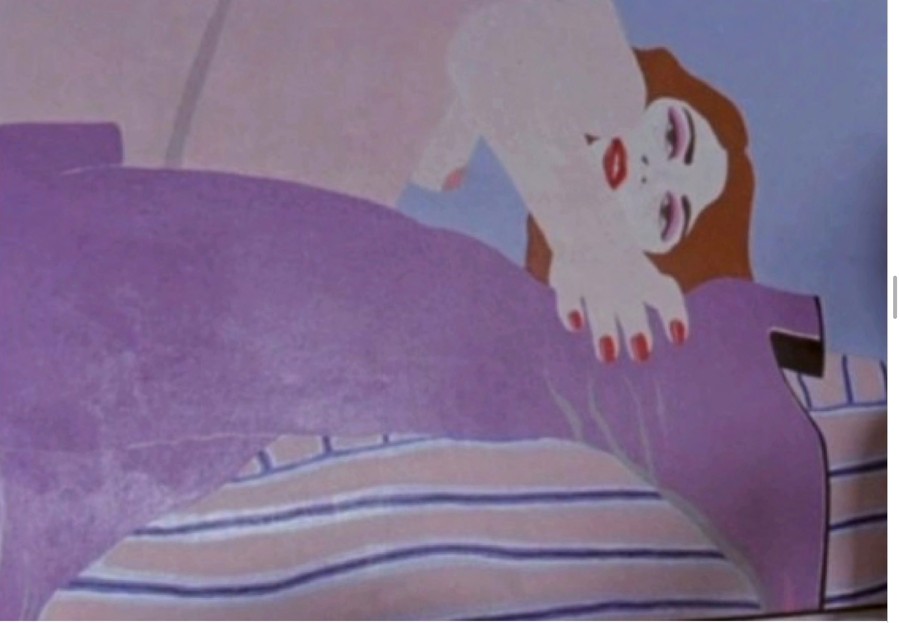
He arrived in London in 1966 the way people did then, which is to say sideways — via Japan, via the American West Coast, via whatever ley-line was running through the culture that decade — and washed up at SPACE, an artist's studio scheme, with his brother Herman a few doors down doing something unspeakable to scrap iron. Herman's contribution to the culture would end up a gleaming white phallus on a rocking base, used by a fictional teenager to beat a yoga instructor to death. Cornelius's contribution was the wallpaper for the crime: the huge, garish, extremely horny paintings that fill the frame in the seconds after the blow lands, because Kubrick — never a director to waste a good composition on discretion — cut straight to the art rather than the body.
That's the transaction, really. Kubrick walked into a London studio, looked at a Dutchman's canvases of women with their legs open rendered in the flattest, most commercial pop palette imaginable, and thought: yes, that's what a psychopath's parents would have on the wall. It is, on reflection, one of the more devastating character notes in the film, and Makkink never gets credit for supplying it.
The line that actually survives from the film is not his. It belongs to the Cat Lady, seconds before Alex kills her with the neighbouring exhibit: “Don't touch it, it's a very important work of art.” She is wrong about the sculpture and, it turns out, accidentally right about the paintings behind her, which is the kind of joke Kubrick specialised in and nobody in the room was meant to notice.
Makkink went home to the Netherlands eventually and did the sensible, adult thing — public commissions, civic works, the respectable back half of a career built on a front half that involved painting soft porn for a man about to make one of the most controversial films of the century. He's better known there now than here, which feels correct. Britain got the twenty seconds of his work it deserved and never learned his name; Holland got the man.