R. Mutt and the Coyote

Duchamp signed a urinal; Beuys shut himself in with a coyote. Two acts of choosing.

KULTUR // IdeasPage 01

Paris, 1917 · a man submits a urinal to his own exhibition · art breaks on purpose

R. MUTT, 1917

Not a biography — the moment Duchamp broke art on purpose, and why that's still the most punk thing anyone's done with a gallery wall.
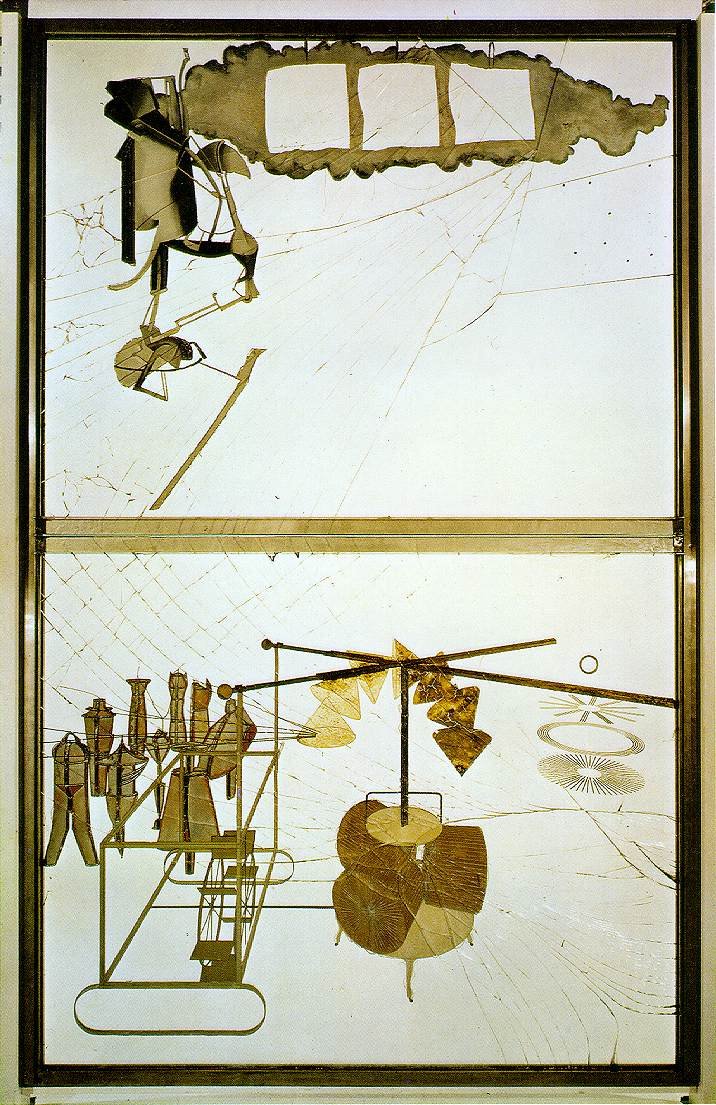
Marcel Duchamp, The Bride Stripped Bare by Her Bachelors, Even (The Large Glass), 1915–1923
Plate I — The Bride Stripped Bare by Her Bachelors, Even (The Large Glass), 1915–1923 — Duchamp’s twenty-year machine of desire and frustration.

In 1917, a man named R. Mutt submitted a porcelain urinal, signed and dated, to an art show that claimed to accept anything for a small fee. The show's own board — which included Marcel Duchamp, sitting on the hanging committee — rejected it without ever admitting who'd sent it in.

Duchamp had submitted it himself. Fountain wasn't hung, wasn't reviewed, and was quietly lost within the year. A photograph survives. That's the whole object now — a photograph of a urinal nobody kept, of a joke the jury didn't get was aimed at them.

He called what he made "readymades" — things he didn't build, only chose and signed. A bottle rack. A snow shovel. A urinal. The making stopped being the point. The choosing was the art, and the artist's signature was the only thing separating a bathroom fixture from a masterpiece — which was rather the joke: that the difference was never in the object at all.

By the 1920s he'd mostly stopped making things on purpose. He played chess instead — competitively, seriously, for decades — and let people assume he'd retired. He hadn't. He was still working, quietly, on a piece nobody would see until after he died: a peephole installation revealing a nude woman in a landscape, built in secret over twenty years while everyone thought he'd given up.

The choosing was the art.
The signature on Fountain — a name that never existed.

The File — DUCHAMP / PARIS: 1917, Fountain, submitted & lost. 3+ readymades signed & shown. 20 years on the final secret work. Decades spent playing chess.
KULTUR · No. 2 · Duchamp & Beuys01
KULTUR // IdeasPage 02

New York, 1974 · three days locked in a room with a coyote · the myth as the medium

I LIKE AMERICA

Not the biography — the myth Beuys built about himself, and whether that was the art or a warning about it.

In 1974 Joseph Beuys flew to New York, was wrapped in felt at the airport, and driven by ambulance straight to a gallery without ever touching American soil. He spent three days locked in a room with a wild coyote. Then he was wrapped up again and flown home. He called it I Like America and America Likes Me. He never saw the country he'd supposedly visited.

The felt and the fat weren't decoration — Beuys said Tartar tribesmen had wrapped him in both after his plane crashed in Crimea during the war, saving his life with animal warmth and grease. He told this story for decades. There is no evidence the crash, or the rescue, happened as described. Whether it's true stopped being the interesting question a long time ago.

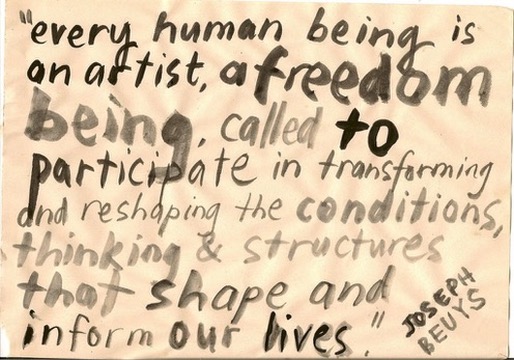
He believed everyone was an artist — not as a compliment, but as a diagnosis. He called it "social sculpture": that a society could be shaped the way a sculptor shapes material, and that politics, teaching, even a conversation, were all just art that hadn't been recognised as such yet. He co-founded a political party. He planted 7,000 oak trees across a city, one tree, one stone marker, each pair a small sculpture that would outlive him by centuries.

Whether Beuys the shaman was a real belief or a performance he never broke character on is still argued over. He seemed to want it both ways — the myth doing real work, whether or not anyone, including him, actually believed it.

The myth doing real work.

The File — BEUYS / NEW YORK: 1974, I Like America, staged. 3 days with the coyote. 7,000 oaks planted. 0 days he actually touched U.S. soil.

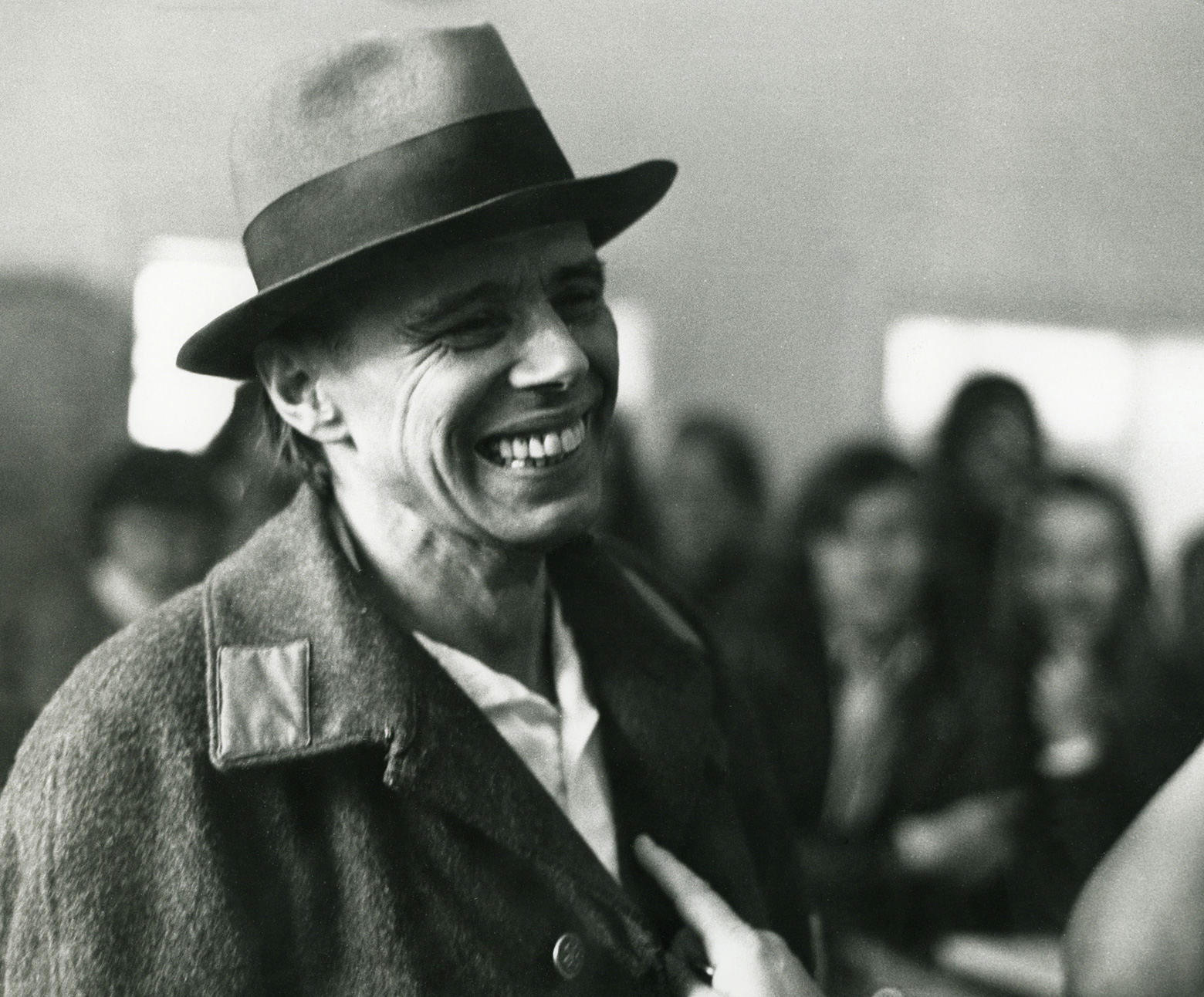
Joseph Beuys in his felt hat, laughing, at an opening
Plate I — the hat, the fisherman’s waistcoat, the grin, the costume he never took off.
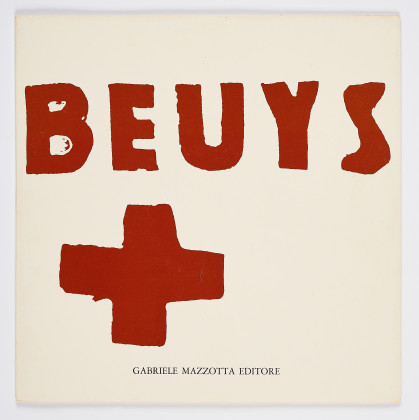
BEUYS catalogue cover, Gabriele Mazzotta Editore, red brushed lettering and cross
Plate II — Beuys, Gabriele Mazzotta Editore, the brown cross as signature.
Joseph Beuys: every human being is an artist, a freedom being, called to participate in transforming and reshaping the conditions, thinking and structures that shape and inform our lives
Evidence 02a — Joseph Beuys, on the artist
KULTUR · No. 2 · Duchamp & Beuys02